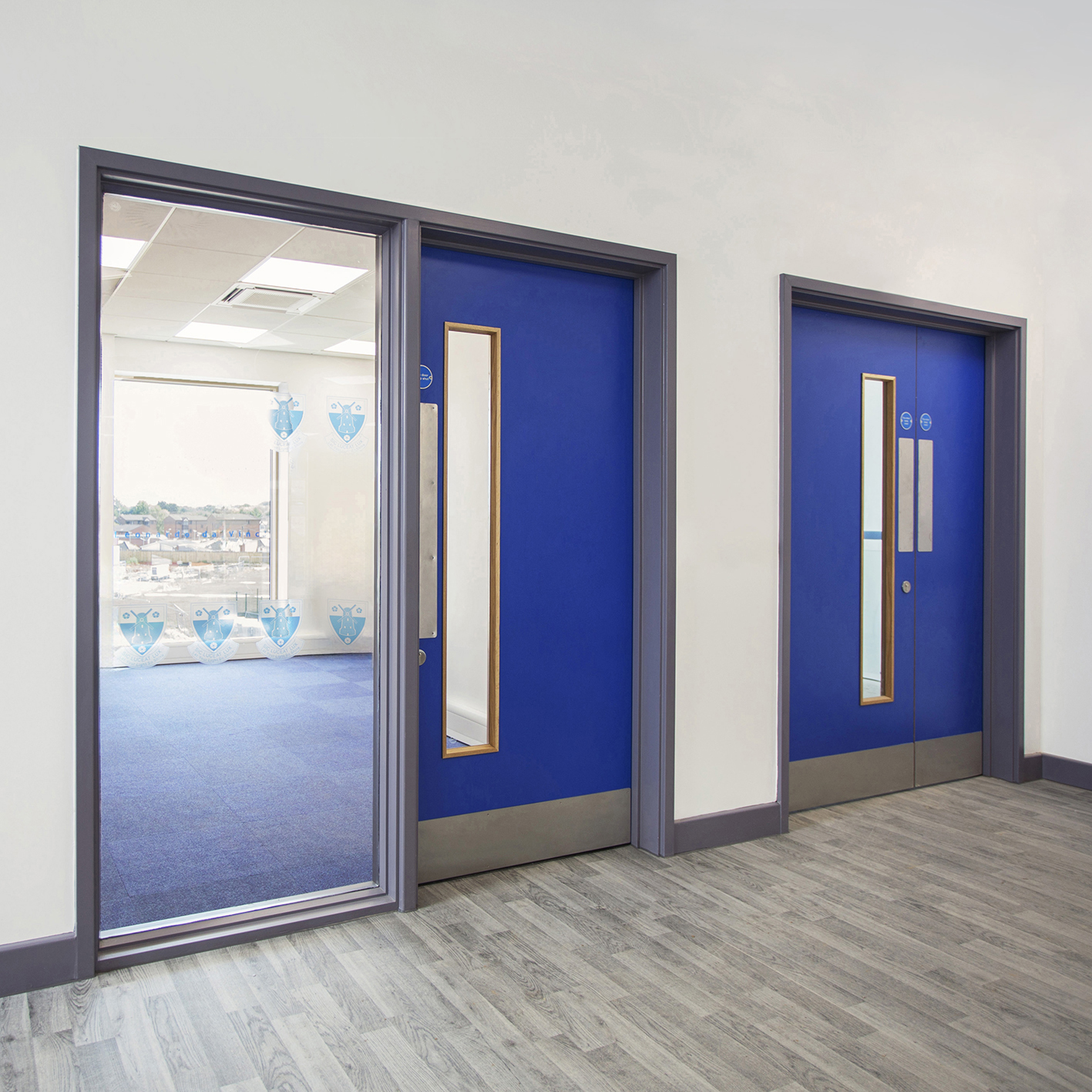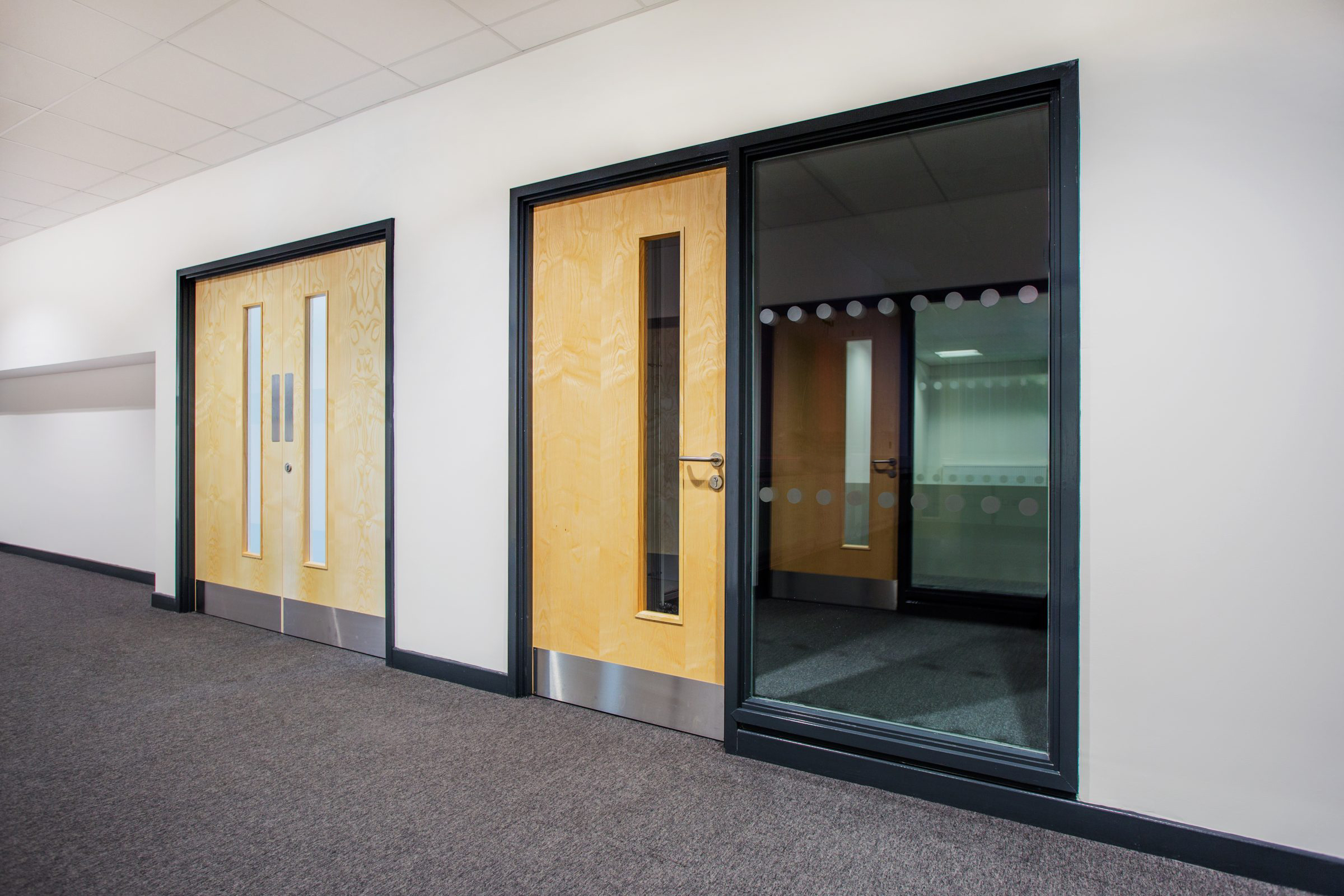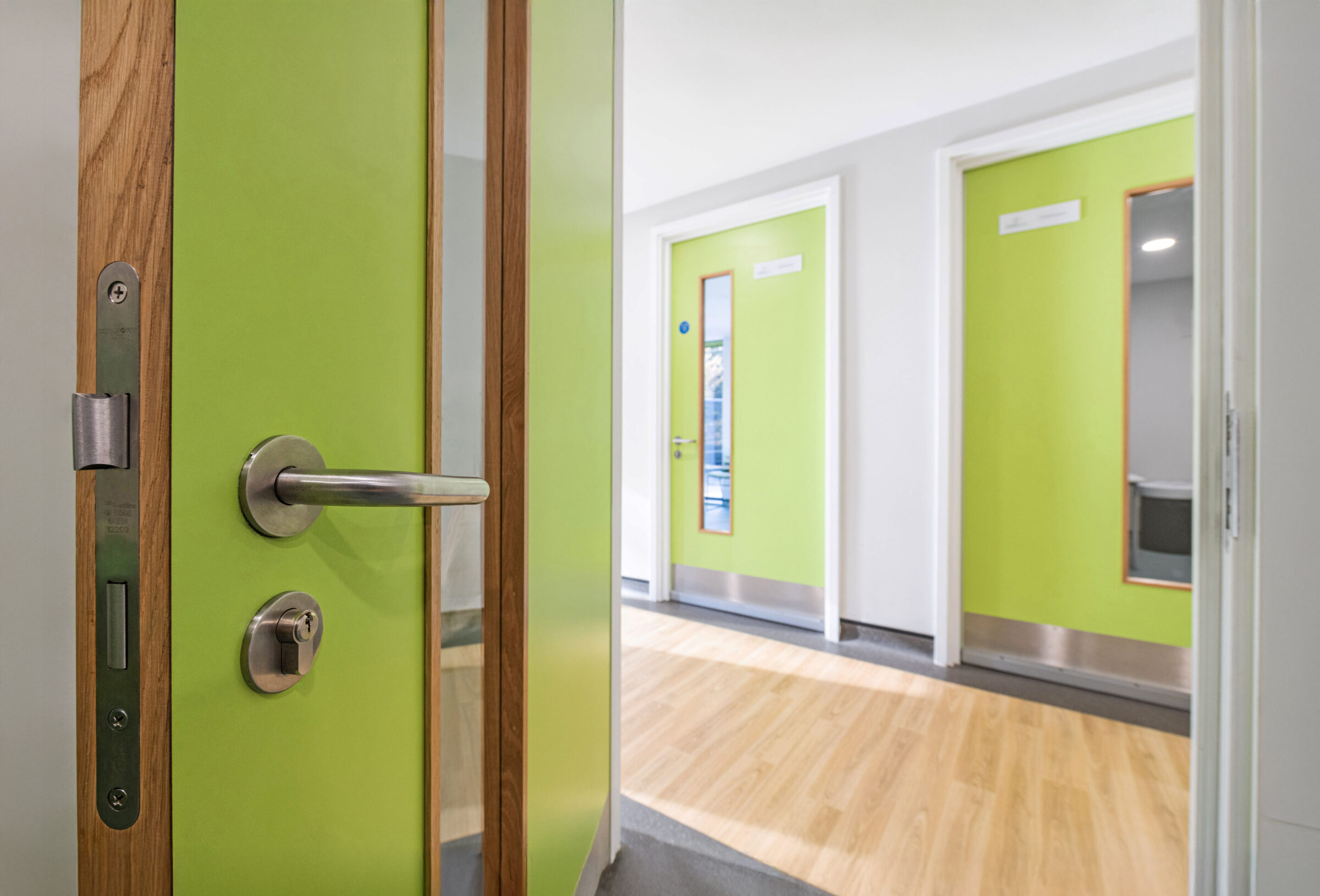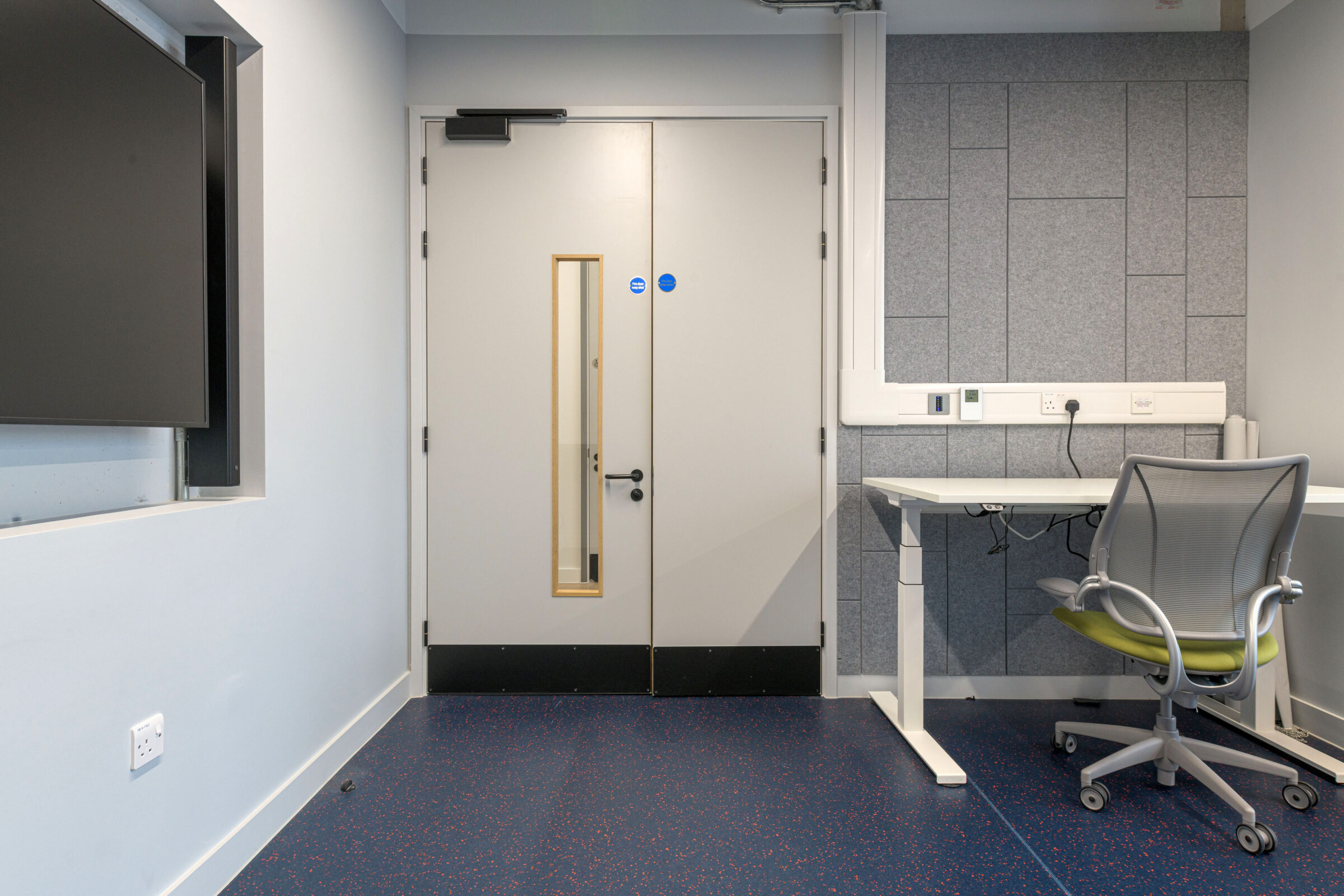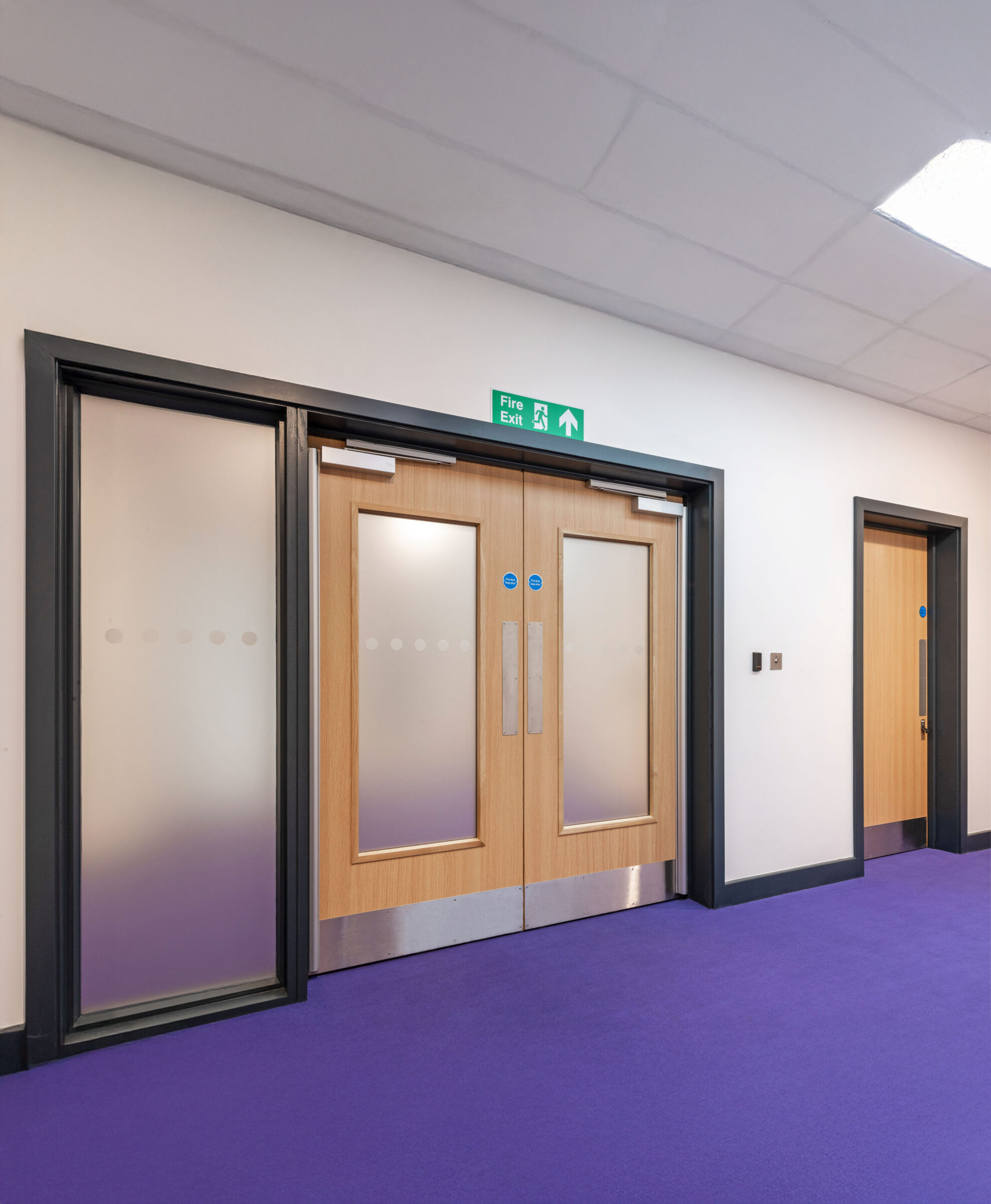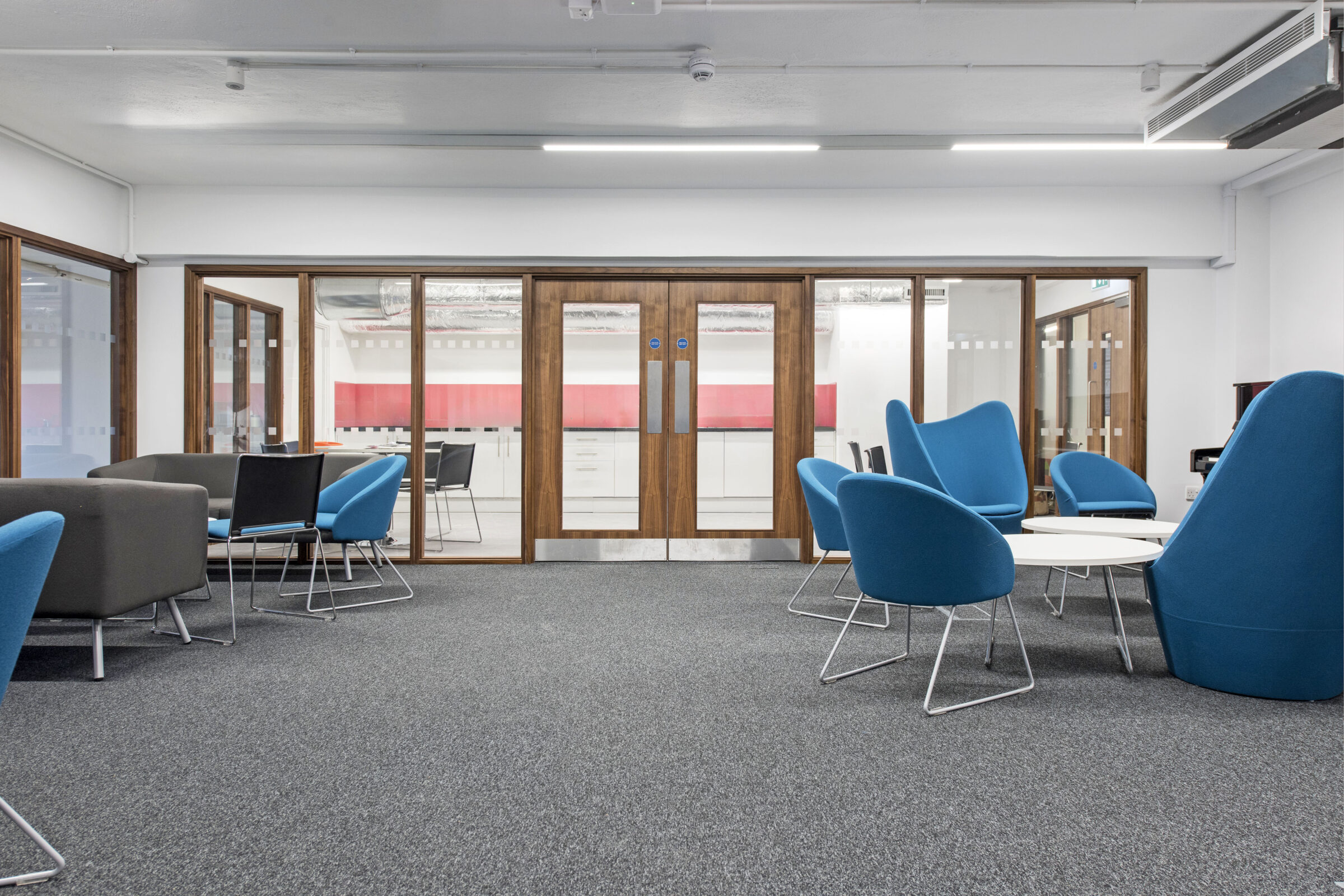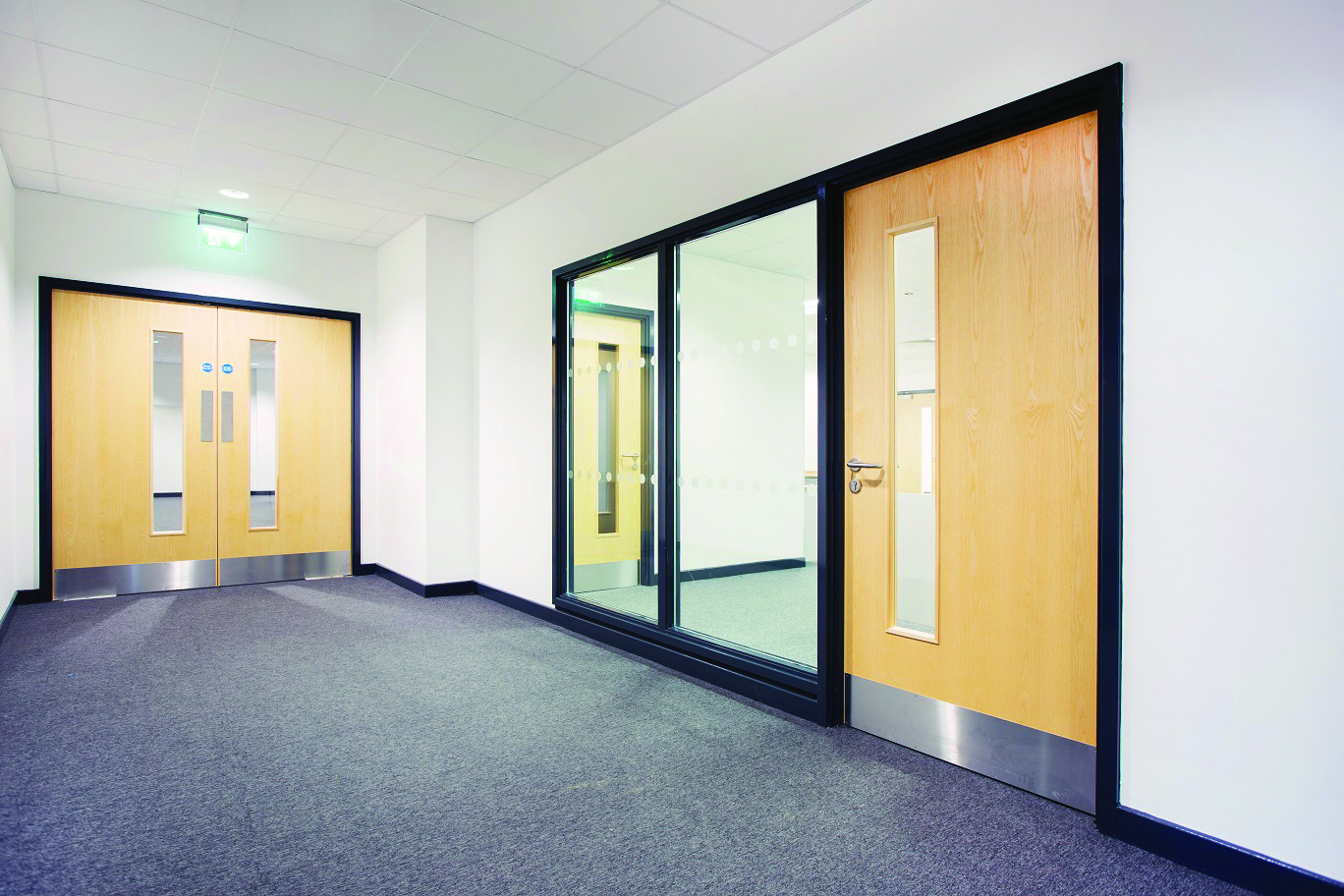




Specifying the correct fire-rated glass for your fire doors isn’t just about compliance – it’s about safety, performance, and visibility.
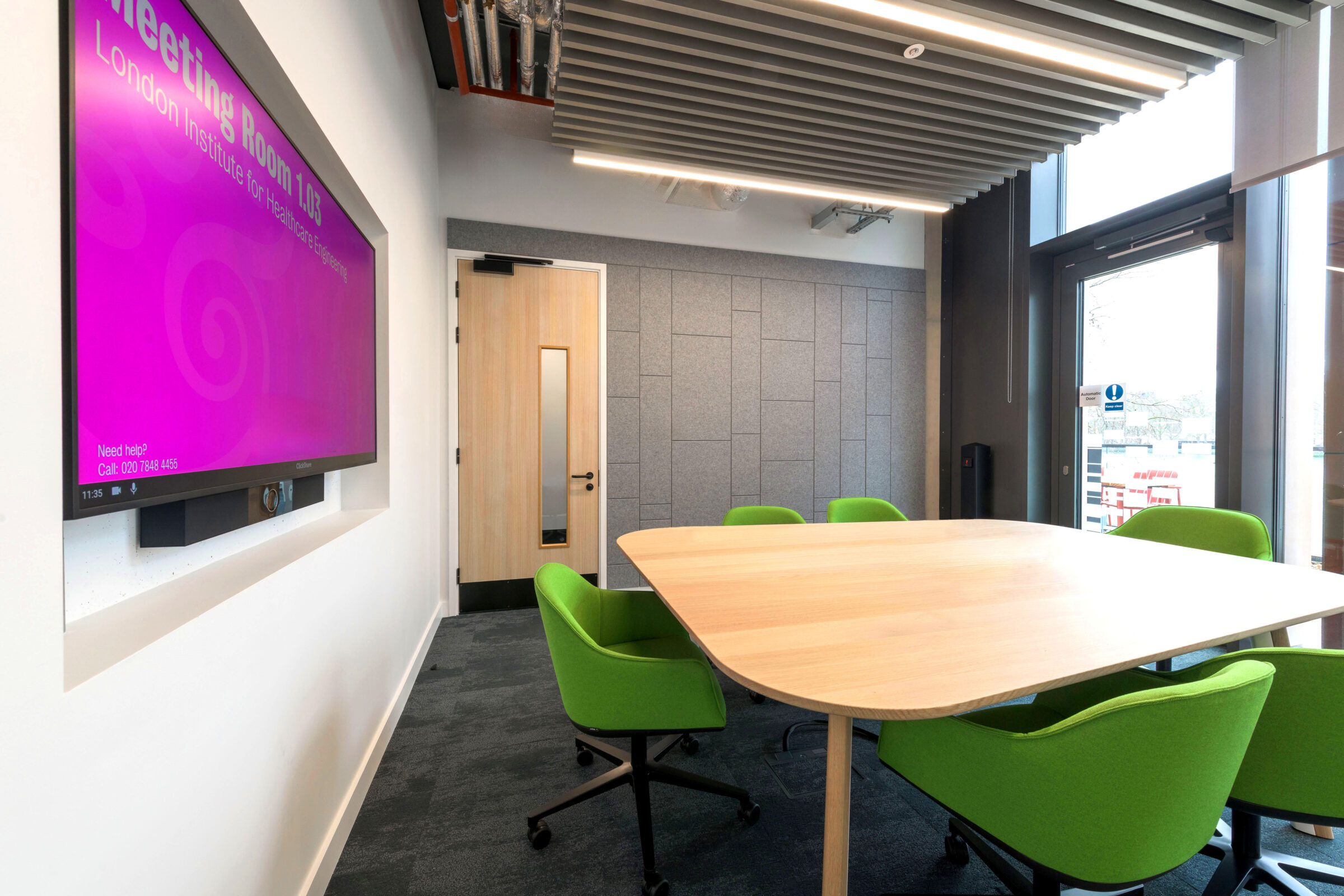
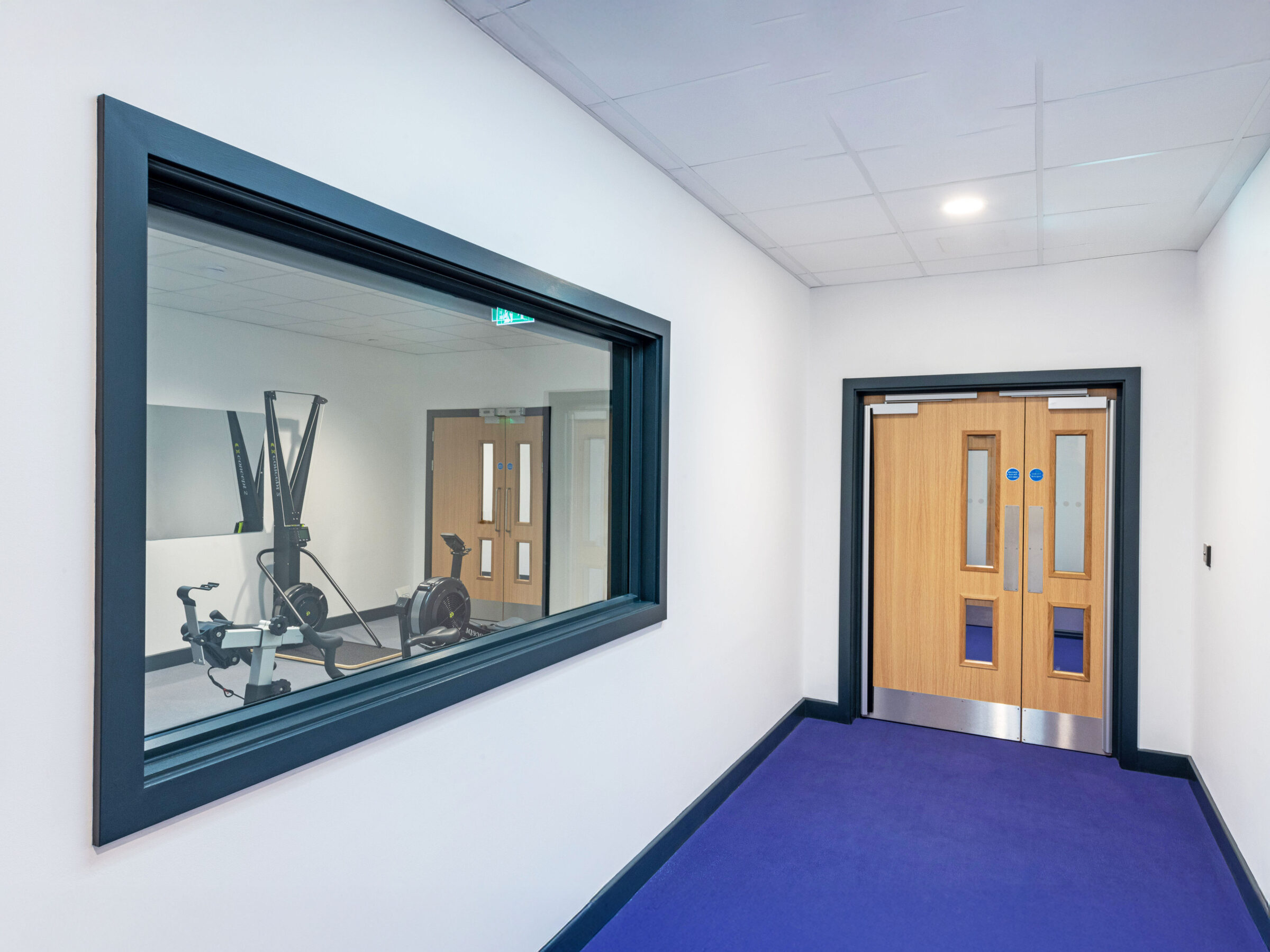
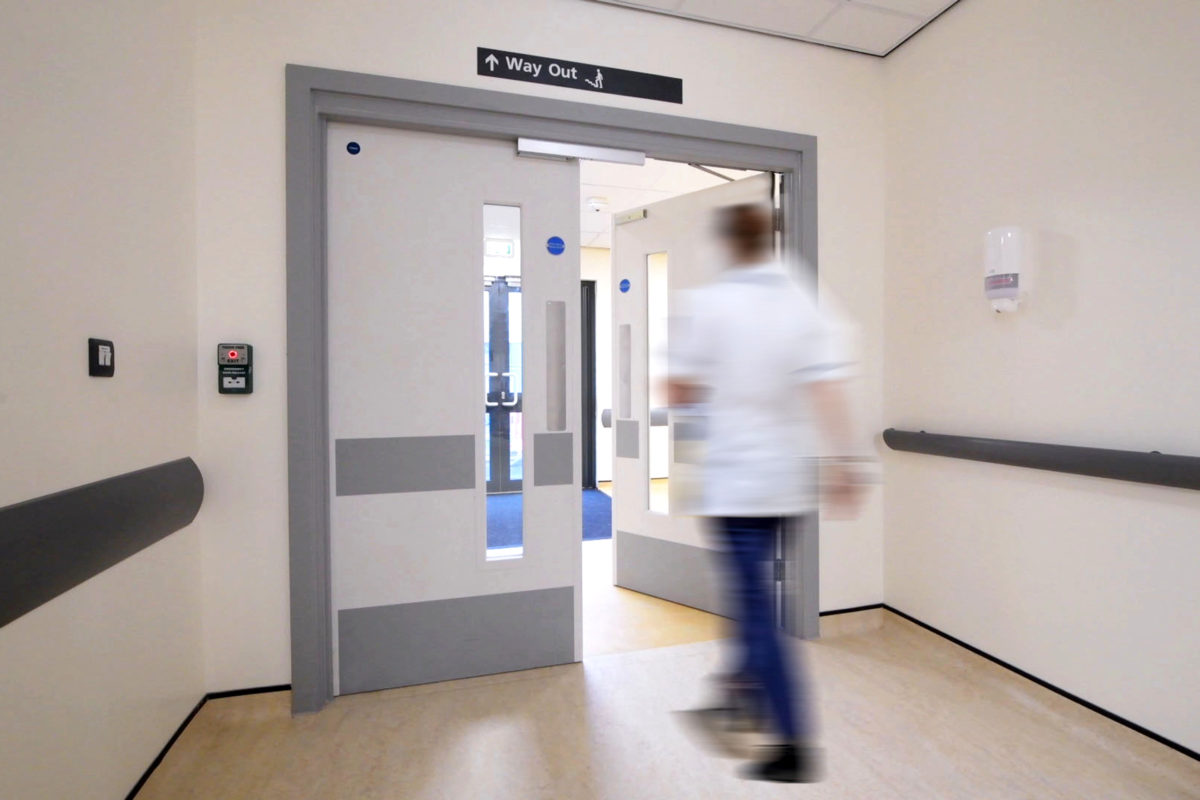
Vision panels (glazed apertures) are an important safety feature, allowing building users to see what’s on the other side of the door, which prevents collision resulting from opening doors. They also enhance the flow of natural light throughout internal spaces.
However, there are considerations to specifying the correct glass for your project beyond its desired fire rating / integrity period. The type of environment and the location of the door within the building, will also influence your glass selection.
The type of environment and the location of the door within the building, will also influence glass selection. For example, in mental health or SEND facilities, selecting toughened glass – which breaks into small, relatively harmless granules – provides an enhanced level of safety. For fire doors located along the main escape routes e.g. corridors and stairwells, specifying glass with an integrity and insulation (EI) classification means the heat along the route is limited, enabling safer evacuation.
Ahmarra’s door ranges are available with glazing options that are compliant under BM TRADA’s Q-Mark Timber Fire Door Manufacture scheme, ensuring;
- Confidence in Specification: Manufactured in accordance with the Q-Mark scope and relevant Field of Application, our third-party certified doorsets achieve the specified performance standard
- Confidence in Specification: Manufactured in accordance with the Q-Mark scope and relevant Field of Application, our doorsets are guaranteed to achieve the specified performance standard
- British & European Standards are Met: All of the fire glass we use has undergone fire resistance testing inline with current BS and EN standards
- Compliance with BS 8300: Our standard vision panels all achieve the Minimum Zone of Visibility accessibility and inclusivity standard
Glazing Systems
The vision panel forms part of the glazing system, which is also made up of the intumescent seal, glazing bead and fixing. The glazing system specification, together with that of the other essential elements of a pre-hung doorset, determines its fire and acoustic performance. The key considerations when specifying vision panels – and glazed side screens – is the fire resistance classification, period of protection and safety classification required, as well as the minimum zone of visibility.
Fire Resistant Glass
Fire door vision panels are made from fire-rated glass. This glass has undergone fire resistance testing in line with British and European standards.
Testing demonstrates the ability of the glass to withstand exposure to fire, in terms of temperature and pressure, whilst maintaining its integrity period i.e. the specified time period of protection.
There are three fire resistant glass classifications;
Integrity (E)
E offers the base level of fire performance and is also the minimum requirement stated by UK Building Regulations. It provides effective protection against fire and smoke, but does not prevent the transmission of heat.
For example, glass with a rating of E60 means that it has an integrity period of 60 minutes.
Integrity & Radiation (EW)
EW represents an increased level of protection. Fire glass that achieves the EW classification offers the same level of protection against fire and smoke as E, as well as a reduction in the amount of radiant heat transmitted to the protected side. Specifically, EW keeps radiant heat below 15kW/m2.
For example, glass with a rating of EW60 has an integrity period of 60 minutes, and also limits radiant heat transfer to a maximum of 15kW/m2 on the unexposed side (non-fire side of the door) for 60 minutes.
Integrity & Insulation (EI)
The EI classification offers the highest level of protection. As well as providing a robust barrier against fire and smoke, EI also offers a significant reduction in the amount of heat transferred through the glass. The length of time the glass will, on its non-fire side, limit the temperature to an average of no more than 140°C (and in any one position no more than 180°C) is known as the insulation period. This means that if there’s a fire on one side of the glass with temperatures above 800°C, but the average temperature of the unexposed side is below 140°C, building users remain protected from the heat and can make a safer escape.
The insulation period is classified by the letters EI followed by the period of protection for both integrity and insulation. For example, an EI 60/30 rating represents a 60 minute integrity period (fire & smoke resistance), and a 30 minute insulation period (heat resistance on the non-fire side of the glass).
The required fire protection rating is specified by Building Regulations following a risk assessment based on the building characteristics and the location of the fire-rated element (facade, partitioning walls, stairways etc).
Please note, that while the type of protection offered is determined by the product’s classification, the length of time for which this protection can be maintained will vary from 30 minutes up to 90 minutes, depending on the door’s fire rating.
Refer to Approved Document B with regard to the specific integrity and insulation requirements for fire doors on escape routes.
Safety Glass
Safety glass – such as toughened glass or laminated glass – meets stringent impact safety tests, ensuring that it prevents injury if a person runs into it. It’s harder to break and does not shatter in the same way that ordinary glass does.
Safety Glass Types
The main types of safety glass are;
Laminated Glass
Laminated glass remains intact on impact even though it’s no stronger than ordinary glass. Its bonded interlayer, which is generally made of polyvinyl butyral (PVB) or ethylene-vinyl acetate (EVA) prevents the glass from breaking into large pieces, and can therefore withstand repeated blows from heavy objects and remain as a barrier to entry even if the glass has been broken.
There are also several different levels of laminated glass, each with unique properties and applications.
Toughened Glass
Toughened glass – otherwise known as tempered glass – has been processed by thermal or chemical treatments to increase its strength. Whilst significantly stronger than standard glass, it is still breakable. However, on breaking it does not shatter in the same way as normal glass, but falls apart in small cube shaped pieces which are less likely to cause injury as opposed to larger shards of glass.
Safety Glass Classifications
For glass to be classified as an impact-safe material, it must undergo an impact safety test in accordance with British Standard BS 6206 and European Standard BS EN 12600.
BS EN 12600 specifies the impact safety requirements for glass used in buildings, using a pendulum impact test to determine the level at which glass will ‘break safely’.
The test enables glass products to be categorised into three main classes. Each class is identified by a three-figure classification made up of a number, a letter, and another number, for example 1B1, 2B2, or 3B3.
During testing, a weighted pendulum is dropped from three heights onto a standard sized pane of glass. The glass is then classified at the point at which it breaks. Classifications are defined as;
- Class 1 (also known as Class 1)
The highest performing, and therefore safest classification of impact rating, this glass breaks when the 50kg weight is dropped from a height of 1200mm. - Class 2 (also known as Class 2)
This glass Type A, B or Cbreaks when a the 50kg weight is dropped from a height of 450mm. - Class 3 (also known as Class 3)
The lowest performing, this glass breaks when a the 50kg weight is dropped from a height of 190mm.
The letter represents how the glass behaves when it eventually breaks;
- Type A – Annealed glass: Breaks into large, sharp shards.
- Type B – Laminated glass: Fragments are held together by an interlayer (common for fire-rated safety glass).
- Type C – Toughened glass: Breaks into small, relatively harmless granules.
The final number indicates the height at which the glass does not break, which will always be the same as the first number for glasses A and B – for example, 1B1, 2B2 or 3B3.
Critical Locations for Safety Glass Installation
It is a legal requirement that safety glass is fitted in all doors, windows and glazed screens / areas that are below 800mm from the finished floor level.
- Vision Panels
Any doors that feature a vision panel that is within 1500mm from the finished floor level, including any glass in doors that does not start over 1500mm from the floor, must be safety glass. - Side Screen / Glazing Adjacent to the Door
Any side screen i.e. glazing adjacent to the door, that is within 300mm of the edge of a door, and which is also wholly or partially within 1500mm from the finished floor level, must be safety glass. Specifying a side screen that’s lower edge is above this level will reduce the risk of breakage, and therefore safety requirements. It may also offer glazing cost savings. - Low Level Glazing
Any other kind of glazing that is within 800mm from floor level should be safety glass. This means that windows that are not located within 300mm of a door must use safety glass if the bottom of the glazing is within 800mm from the finished floor level.
Minimum Zone of Visibility
All of Ahmarra’s standard vision panels meet the minimum zone of visibility requirements outlined in BS 8300.
Other vision panel sizes and configurations are available upon request, providing the glazed area complies with our fire certification.
According to BS 8300-2:2018 the minimum zone of visibility should be between 500mm and 1500mm above floor level, with a maximum interruption of 350mm vertically within the zone.
Privacy Vision Panels
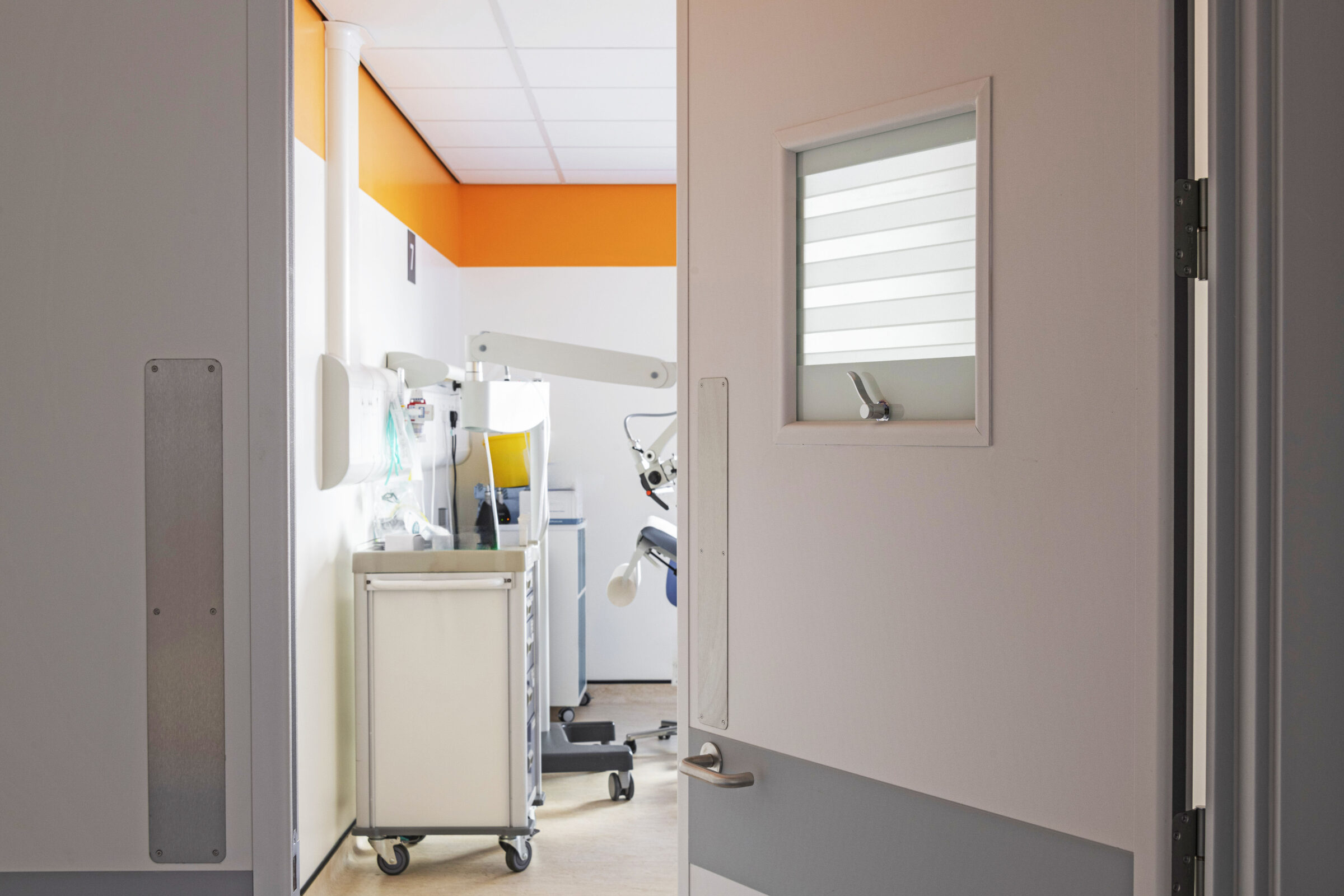
Ahmarra also offer privacy vision panels. These triple glazed systems feature a large viewing aspect and full length, evenly spaced, alternating lines. This allows for discreet and secure observation, whilst having the appearance of contemporary Venetian blinds.
Blinds are operated using the Vistamatic proprietary lever mechanism. When the lever is turned, the inner sheet of glass rises to enable observation and, by turning the handle back, vision is obscured.
To learn more about Privacy Vision Panels, click here.
For guidance tailored to your unique project, our experienced specification team are on hand to offer industry-leading advice at every stage, ensuring your glazed doorsets and screens are fully compliant.
To contact our team, call 02392 389 076 or email sales@ahmarra.co.uk