Specifying Certified Fire Doors for the Education Sector
Specifying fire doors can be one of the more complex elements of a construction project. As a life safety measure, fire doors must meet stringent legal and performance standards to ensure the protection of building occupants and property. In education environments, where buildings are occupied by children and young people, the role of fire doors becomes even more significant.
By helping to contain fire and smoke, fire doors provide vital time for staff to manage safe and orderly evacuation. However, fire performance is only one aspect of the specification. In schools, colleges and universities, fire doorsets are required to meet a wider set of demands. These can include acoustic control for effective learning environments, enhanced durability to withstand high traffic, hygienic finishes to support infection control, carefully selected ironmongery, and compliance with accessibility requirements. This guide explores the key considerations when specifying fire doors for education settings – helping you navigate regulatory requirements, performance needs and practical design factors to ensure safe, compliant and effective solutions.
Third-party Certification
UK fire door manufacturers are legally required to demonstrate that their products can resist the passage and spread of fire to a defined performance standard. Specifying third-party certified fire doors is widely regarded as the most reliable way to ensure compliance with the fire safety standards outlined in Approved Document B of the Building Regulations. Fire doorsets that have been independently tested by a UKAS-accredited testing facility and certified under a recognised third-party scheme offer an additional level of assurance beyond minimum legal requirements. Continuous auditing ensures that the products remain consistent with the original tested specification, providing confidence that they will perform as intended in the event of a fire.
One example is the BM TRADA Q-Mark Timber Fire Door Manufacture scheme, a third-party product certification programme for construction products. Operated by BM TRADA, an independent certification body, it is widely regarded as one of the most rigorous fire door certification processes in the UK. The most effective way to ensure that fire doors meet the necessary safety standards is to specify independent third-party certification for both the manufacturer and the installer. Ahmarra strongly endorse third-party certification, and as such, are members of both the Q-Mark Timber Fire Door Manufacture scheme and Q-Mark Fire Door Installation scheme.
Acoustic Performance
Doors play a critical role in limiting the transfer of noise between classrooms, helping to create an environment conducive to concentration and effective learning. Acoustic performance is achieved through a combination of engineered door cores and carefully specified perimeter seals, designed to minimise sound transmission. When correctly specified and installed, these components help maintain appropriate acoustic separation between teaching spaces, supporting student engagement.
Enhanced Durability & Longevity
Educational environments place significant demands on building components, with doors in particular subject to frequent use and impact. To withstand these conditions, doorsets can be faced with high-pressure laminate (HPL), a robust surface material that provides excellent resistance to scratches, stains and impacts. Combined with protection plates, these severe-duty doorsets are well suited to high-traffic school environments. Ahmarra apply solid timber lippings to all four edges further enhance durability by protecting the door core from damage and extending the product’s lifespan.
Infection Control
Maintaining hygienic environments is an important consideration within schools. Our doors can be specified with Polyrey high-pressure laminate surfaces that incorporate anti-bacterial compound. Unlike surface-applied coatings, the anti-microbial compound is integrated throughout the material during manufacture, providing continuous protection. Capable of eliminating up to 99.9% of bacteria within 24 hours, this helps to minimise the spread of infection, safeguarding staff and students.
Pre-hung Doorsets with Compatible Ironmongery
Doorsets can be supplied as complete pre-hung units, with door leaves factory-hung within their frames and all essential hardware components – including ironmongery, glazing systems, intumescent seals and drop-down acoustic seals – pre-fitted as standard. Factory-controlled tolerances and preset clearance gaps significantly reduce the need for on-site adjustment, helping to streamline installation.
Accessibility
Providing inclusive access is a fundamental requirement in the design of public buildings. The British Standard code of practice BS 8300-2:2018 states that surfaces within buildings provide a Light Reflectance Value (LRV) contrast of at least 30 points to assist people with visual impairments in identifying key elements such as doors. This contrast can be achieved through the specification of coloured laminates, painted finishes or natural wood veneers, allowing doors, frames and ironmongery to stand out clearly from surrounding surfaces.
Finger Protection
Finger entrapment in doors is a common cause of injury, particularly in environments where young children are present, such as nurseries and primary schools. To mitigate this risk, fire doors can be specified with either retrofitted or integral finger protection systems. Retrofit finger guards prevent fingers entering the gap between the door leaf and frame at the hinge edge. Alternatively, integral solutions form part of the doorset’s design. Ahmarra’s AhmGuard system, for example, incorporates an engineered ergonomic curve along the hinge edge, forming an integral part of the timber doorset. This prevents fingers from being crushed regardless of whether the child is standing on the opening or closing side of the door.
Wayfinding
In larger educational environments, such as university campuses, navigation can often be challenging for students and visitors. Doors can contribute to intuitive wayfinding strategies through the use of colour-coded laminates, helping to visually differentiate departments, floors or circulation zones and supporting clearer spatial orientation throughout the building.
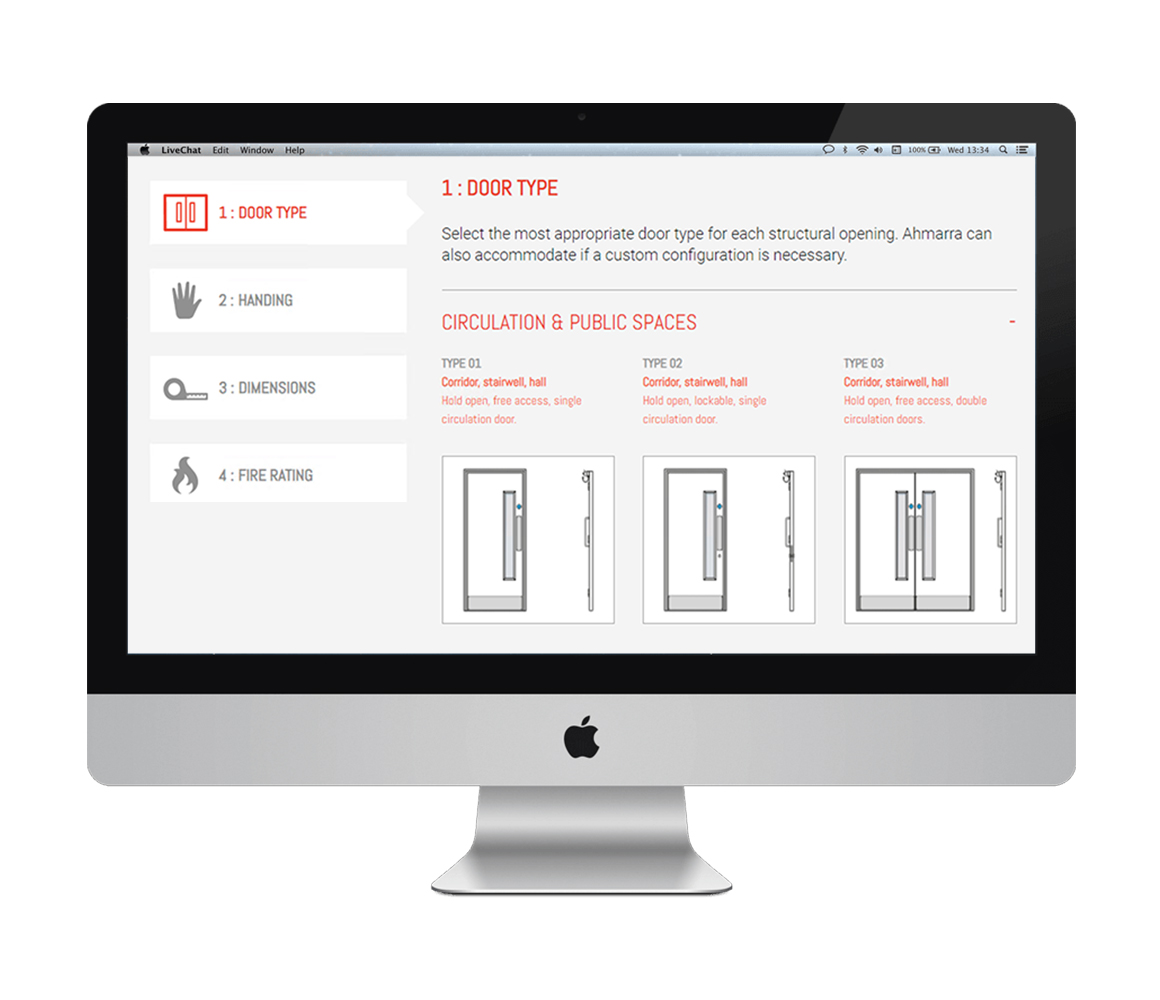
To support architects and specifiers, we have a comprehensive range of technical resources dedicated to fire doors and glazed screens for the education sector, including their L20 Specification Tool, and Education Door Range Brochure & Selector. The company’s Education Range is also available to specify via NBS Source.